
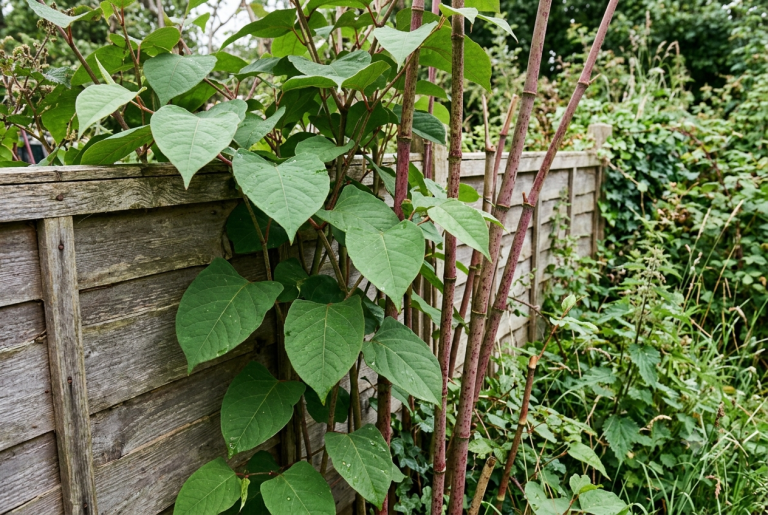
Japanese knotweed has a fearsome reputation among homebuyers — for years, its mere presence was treated as close to a deal-breaker for mortgage lending. That’s changed significantly, and it’s worth understanding what the current rules actually say before assuming the worst.
How fast Japanese knotweed spreads
Japanese knotweed is an aggressive invasive plant. It can grow at a rate of roughly a metre per week during peak growing season, and its root system (rhizome) can extend several metres in all directions underground — which is exactly why it earned its reputation for causing damage to paths, drains, and outbuildings if left unchecked.
The old rule, and why it changed
For years, RICS surveyors worked to a “seven-metre rule” — if knotweed was found within seven metres of a building, it was flagged as a significant risk; if it was further away, it generally wasn’t. In 2022, RICS scrapped this rule after a House of Commons committee found that mortgage lenders’ approach to knotweed had become “over cautious” and was having a chilling effect on otherwise straightforward property sales. The updated guidance replaced the distance-based rule with four “management categories” (A to D), based on the actual impact the knotweed is having — whether it’s causing visible damage, restricting use of the garden, or simply present without any current impact — rather than measuring distance alone.
Can you still get a mortgage if knotweed is present?
Yes, in most cases. Where knotweed is present but not causing structural damage, many lenders will proceed on the basis of a management plan (typically from a Property Care Association-accredited specialist) backed by an insurance-backed guarantee, sometimes with funds temporarily retained until the treatment is confirmed. Where it’s actually growing through or against the building and causing visible damage, lenders are more cautious, and full excavation with a long-term guarantee is more likely to be required. Policies still vary noticeably between lenders, so what’s acceptable to one bank may not automatically be acceptable to another.
What to do if a survey flags it
If a survey identifies Japanese knotweed, the report should specify which management category applies and what — if anything — needs addressing before a mortgage offer is likely to proceed. It’s rarely the property-killing problem its reputation suggests, but it’s also not something to ignore, since the specifics genuinely do affect both value and lending.


